
Tarot is much more than a deck of beautiful cards. It is a reflective tool that has been used for centuries to encourage self-awareness, explore possibilities, and gain fresh perspectives on life's questions. Whether you're curious about tarot or just beginning your journey, learning to read the cards can be a meaningful practice of personal reflection and intuition.
What Is Tarot?
A traditional tarot deck consists of 78 cards, each carrying unique imagery and symbolism. These cards are divided into two sections:
- The Major Arcana (22 cards): Represents significant life themes, personal growth, and important turning points.
- The Minor Arcana (56 cards): Reflects everyday experiences, emotions, relationships, work, and practical situations.
Rather than predicting a fixed future, many people use tarot to better understand their current circumstances, explore different perspectives, and support thoughtful decision-making.
Choosing Your First Tarot Deck
One of the most common questions beginners ask is, "Which deck should I choose?"
The best tarot deck is often the one that you feel naturally drawn to. Look for artwork and symbolism that resonates with you and inspires curiosity.
Many beginners start with the Rider-Waite-Smith Tarot because its illustrations make learning the meanings of the cards easier.
Preparing for a Reading
Before beginning a reading, take a few moments to create a calm environment.
You may choose to:
- Sit quietly for a few minutes.
- Take several deep breaths.
- Set an intention for your reading.
- Hold the deck while focusing on your question.
There is no perfect ritual. The most important thing is approaching the reading with openness and curiosity.
Asking Meaningful Questions
The quality of your reading often begins with the quality of your question.
Instead of asking:
"Will I get the job?"
Consider asking:
- What strengths can I bring to this opportunity?
- What should I focus on during this process?
- What can I learn from this situation?
Open-ended questions encourage deeper reflection and richer insights.
Your First Tarot Spread
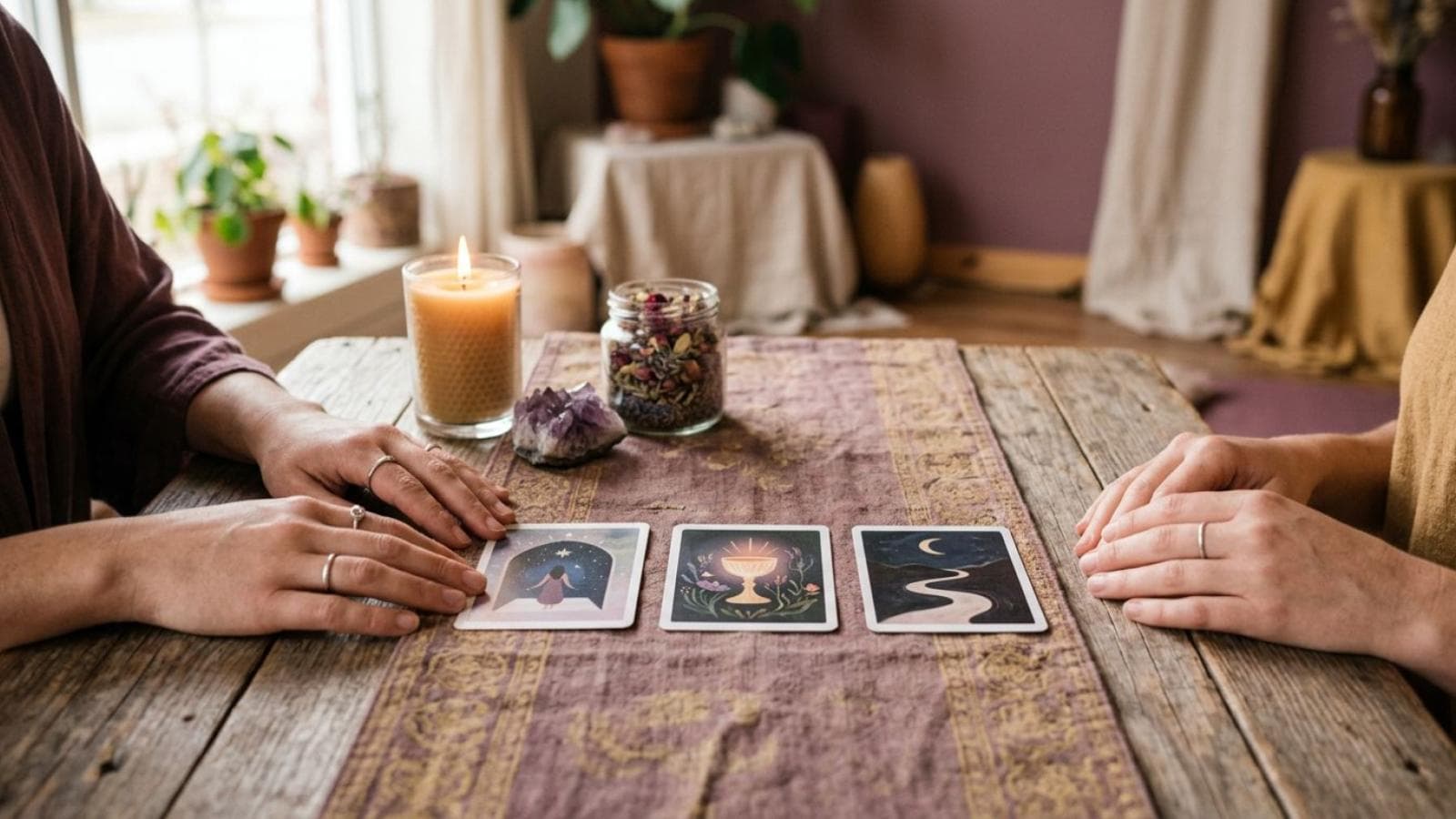
A simple three-card spread is an excellent place to begin.
Card 1 – Present Situation
What is happening now?
Card 2 – Challenge or Opportunity
What should I understand or pay attention to?
Card 3 – Guidance
What wisdom or next step may support me?
As you become more comfortable, you can explore larger spreads.
Trust Your Intuition
While guidebooks provide traditional meanings, your own observations also matter.
Notice:
- Which images stand out?
- What emotions arise?
- What symbols catch your attention?
- How do the cards relate to your question?
Learning tarot is a balance between studying traditional symbolism and developing your own intuitive understanding.
Keep a Tarot Journal
Recording your readings is one of the best ways to deepen your practice.
Include:
- The date
- Your question
- The cards you drew
- Your initial impressions
- What happened afterward
Over time, you'll notice patterns and build confidence in your interpretations.
Common Beginner Mistakes
Remember:
- You don't need to memorize every card immediately.
- There is rarely only one "correct" interpretation.
- Tarot is a skill that develops with practice.
- Avoid reading when you're feeling overwhelmed or seeking certainty about every decision.
Approach each reading with patience and curiosity rather than pressure to get everything right.
Final Thoughts
Tarot is a journey of learning, reflection, and personal growth. Each card invites you to pause, look within, and consider life from a different perspective. As you spend more time with your deck, you'll become familiar with its symbols and discover an interpretation style that feels authentic to you.
Whether you use tarot for daily reflection, journaling, or personal insight, remember that the greatest wisdom often comes from combining the cards' symbolism with your own intuition and life experience.
At Zen Oasis Wellness Center, we believe tarot is a beautiful tool for self-discovery, helping you reconnect with your inner wisdom, gain clarity, and navigate life's journey with greater awareness and confidence. To explore this practice further, discover our sessions or book a session with our team.