
Rituals & Practices September 2026
New Moon to Full Moon: A Simple Monthly Ritual Flow
Follow the moon's natural rhythm with this simple new moon to full moon ritual flow — intention, action, reflection, and rest, in four easy phases.
Read MoreHeal Your Soul Trust Your Journey Live In Harmony
Rituals & Practices

Learn how to start a spiritual practice that actually lasts — small daily habits, gentle consistency, and simple ways to build meaning over time.
Learning how to start a spiritual practice usually goes wrong for one simple reason: people try to build an elaborate routine on day one instead of choosing one small, repeatable action and sticking with it. A meaningful spiritual practice isn't defined by how many rituals it includes — it's defined by how consistently you actually return to it.
This distinction sounds obvious once it's said out loud, yet it's the single most common reason well-intentioned attempts at spiritual practice quietly fade within a few weeks. The ambition of the plan and the size of the actual habit are two different things, and confusing them is where most people get stuck before they've even really started.
If you've felt drawn to meditation, journalling, prayer, card reflection, or simple mindful rituals but never quite found a way to make any of it stick, this guide is built around one core idea: start smaller than feels necessary, and let meaning build through repetition rather than through getting the "right" practice from the start.
A spiritual practice is any repeated, intentional action that helps you stay connected to a sense of meaning, presence, or inner awareness over time. It doesn't require a specific belief system, religious tradition, or elaborate setup — it simply requires consistency and honesty about what genuinely feels meaningful to you.
For some people that's meditation. For others it's a nightly gratitude list, a weekly card reflection, a Sunday walk without a phone, or a few quiet minutes of prayer. The form matters far less than the return to it. A five-minute practice done daily will shape your inner life more than an elaborate one you do twice and abandon.
It's worth separating a spiritual practice from a spiritual performance. A performance is concerned with how a practice looks — the aesthetic of the candles, the perfectly kept journal, the meditation cushion arranged just so. A practice is concerned with what actually happens inside you while you do it. The two can overlap, but only one of them is actually necessary for the practice to be meaningful.
Most people struggle to start a spiritual practice because they try to adopt someone else's routine wholesale — a 45-minute morning ritual they saw online, a specific meditation app, a particular tradition's full set of practices — before they've built the much smaller habit of simply showing up for five minutes a day.
The fix for all four is the same: shrink the practice until it feels almost too easy to skip, and build up from there once the habit itself feels stable.
There's also a quieter trap worth naming: perfectionism disguised as discernment. Spending weeks researching the "correct" way to meditate, the "right" journal prompts, or the ideal time of day can feel like preparation, but it often functions as a socially acceptable way to keep delaying the actual practice. At some point, the research has to give way to simply beginning, even imperfectly.
Choosing a practice that fits you starts with an honest inventory of what you're actually drawn to, rather than what looks most impressive or spiritual from the outside. A few starting points, depending on what resonates:
You don't need to choose only one forever. Many people rotate between two or three of these depending on the season of life they're in — the goal is finding what you'll actually return to, not locking yourself into a single "correct" method.
A useful test when choosing: notice which of these options you find yourself genuinely curious about, versus which ones you feel you "should" do because they seem more legitimately spiritual. Curiosity tends to sustain a practice far longer than obligation does, even if the curious option looks less impressive from the outside.
Looking for simple tools to help you get started — guided prompts, reflection sheets, or meditation resources?
Explore free resources from Zen OasisStarting small is the single most important principle in building a spiritual practice that lasts, because consistency compounds far more powerfully than intensity. A two-minute practice done every day for a month builds more genuine change than a one-hour practice attempted twice and abandoned.
It also helps to decide, in advance, what "small enough" actually means for you. For some people that's ninety seconds of quiet breathing. For others it's a single line in a journal. There's no universal minimum — the right size is whatever you can imagine doing on your busiest, most exhausted day without resistance.
Consistency over perfection means treating a missed day as neutral information, not evidence that the practice has failed. Spiritual practice, unlike a strict discipline with pass-or-fail outcomes, tends to work best when it flexes around real life rather than demanding rigid adherence.
A practice that flexes tends to last years. A practice that demands perfection tends to last weeks.
It's worth watching for one particular trap here: the "all or nothing" thought that shows up after a missed day — "I've already broken my streak, so I might as well skip this week too." That single thought derails more spiritual practices than any external circumstance does. Treating each day as its own independent choice, rather than part of an unbroken chain, tends to keep the practice resilient over the long run.
Building a simple weekly rhythm gives your daily practice a bit of natural variation without adding complexity. A basic structure some people find helpful:
| Day | Focus | Example Practice |
|---|---|---|
| Weekday mornings | Grounding | Two minutes of quiet breathing or intention-setting. |
| Weekday evenings | Reflection | Three sentences of journalling on the day. |
| One weekend day | Deeper practice | A longer walk, meditation, or card reflection session. |
This isn't a rule to follow exactly — it's an example of how a practice can have gentle texture across the week without requiring the same effort every single day.
Finding support for your practice matters because spiritual habits, like most habits, tend to last longer when they're not carried entirely in isolation. Knowing that others are building similar routines — even quietly, without direct comparison — adds a layer of accountability and belonging that solo practice often lacks.
This is one reason community spaces exist alongside individual practice: not to replace your own routine, but to remind you that reflection, ritual, and intention-setting are shared human practices, not private eccentricities.
Want to build your practice alongside others exploring the same path?
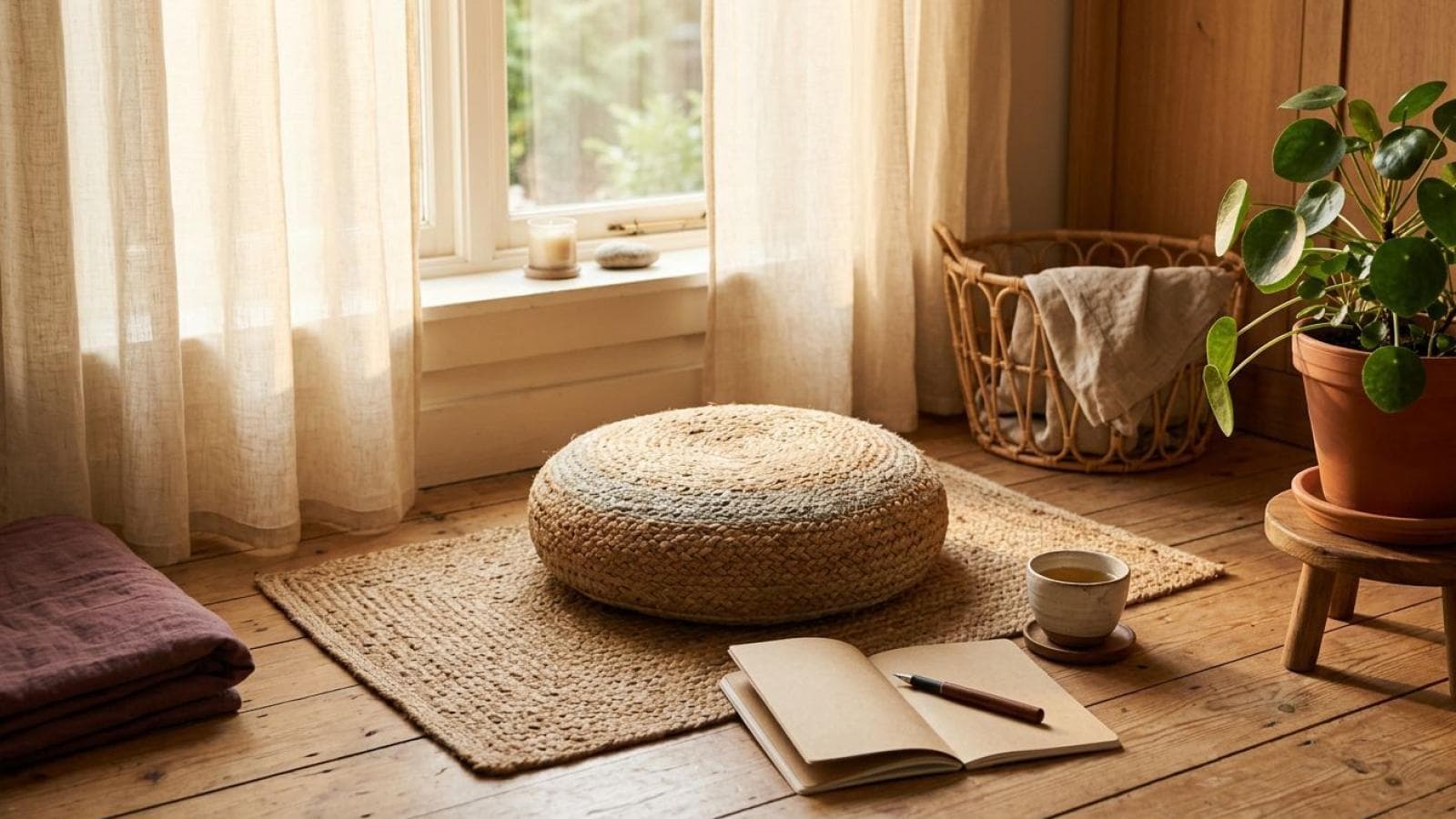
Join the Zen Oasis communityCreating a physical space that supports your practice makes returning to it far easier, since a dedicated spot — even a small corner — signals to your mind that it's time to shift into that quieter mode. You don't need a large room or expensive decor; a chair by a window, a cushion in a quiet corner, or a small table with a candle can all work.
If you'd like a fuller walkthrough on building that kind of space, our guide on how to create a sacred space covers exactly this — turning even a small, ordinary corner of your home into a place that supports quiet, consistent practice.
A meaningful spiritual practice naturally changes over time, and that's not a sign it's failing — it's a sign it's actually alive and responding to your life rather than sitting frozen as a fixed routine. What feels grounding in one season — quiet meditation during a calm stretch of life — might feel insufficient during a harder season that calls for more active practices like journalling or movement.
Rather than treating this evolution as inconsistency, it helps to check in with your practice every few months and simply ask: is this still serving me, or has it become habit for its own sake? Adjusting the form while keeping the underlying commitment to showing up is what keeps a practice meaningful across years rather than weeks.
Start by trying one small practice — such as two minutes of quiet breathing or three sentences of journalling — for a week, then notice how it feels before committing further. You don't need to know your ideal practice in advance; most people discover what fits through simple trial rather than upfront certainty.
A daily spiritual practice can be as short as two to five minutes, especially when you're just starting out. Consistency at a small, sustainable length tends to build a stronger habit than an ambitious routine that's abandoned after a few days.
Missing several days is normal and doesn't undo your progress — simply return to the practice without treating the gap as a failure. Many long-term practices include stretches of inconsistency, and what matters most is returning rather than maintaining an unbroken streak.
No, a meaningful spiritual practice doesn't require any specific religious tradition. Practices such as journalling, mindful walks, gratitude, and intention-setting can be built around your own personal beliefs and sense of meaning.
Yes, many people rotate between a few practices — such as morning meditation and evening journalling — depending on what feels most useful in a given season of life. There's no rule limiting you to a single method.

Konchok Yangchen
Konchok Yangchen is an Intuitive Healer, Psychic Medium, Oracle Reader, and Holistic Counsellor, and the founder of Zen Oasis Wellness Center.
Related
Rituals & Practices September 2026
Follow the moon's natural rhythm with this simple new moon to full moon ritual flow — intention, action, reflection, and rest, in four easy phases.
Read More
Rituals & Practices August 2026
August 8, 2026 carries a rare triple-8 vibration (8/8/8). Explore the spiritual meaning of the Lion's Gate Portal, the crystals that support it, and a simple step-by-step ritual for setting your eight intentions.
Read More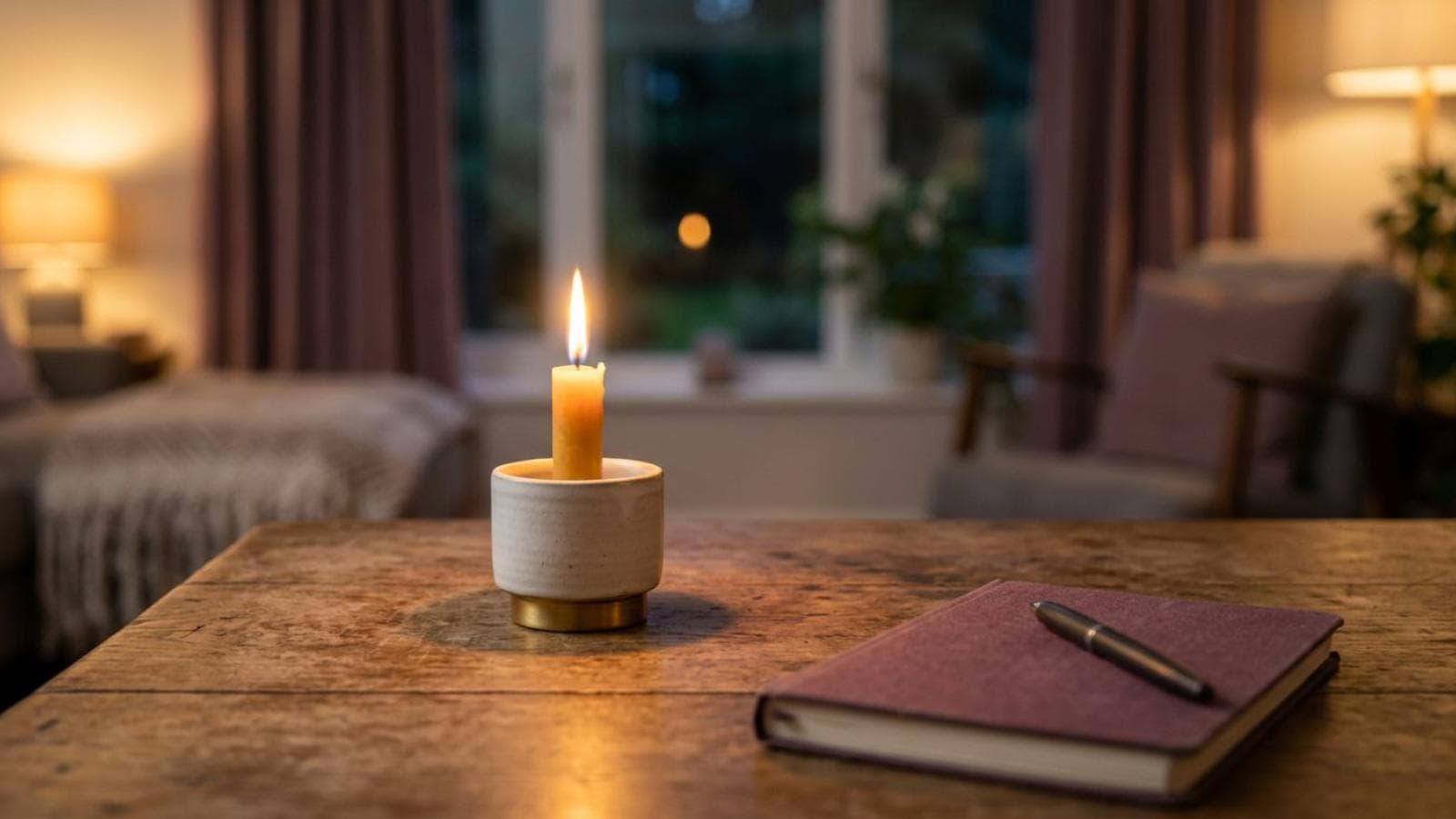
Rituals & Practices July 2026
Candle rituals offer a mindful way to pause, reflect, and focus on your intentions. Learn what candle magic is, how to choose a candle, a simple ritual to try, and journal prompts to deepen your practice.
Read More